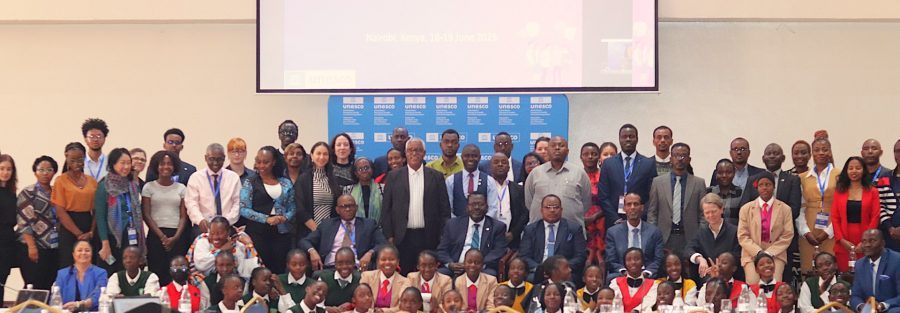
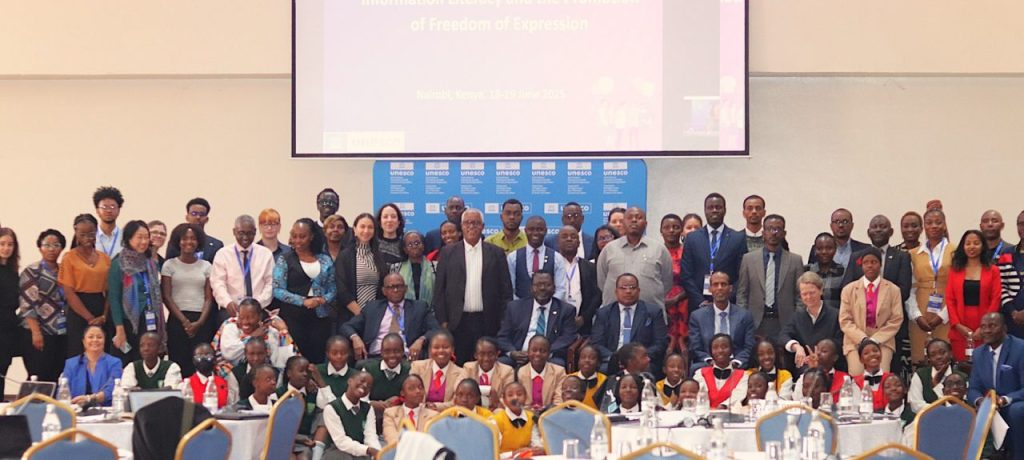
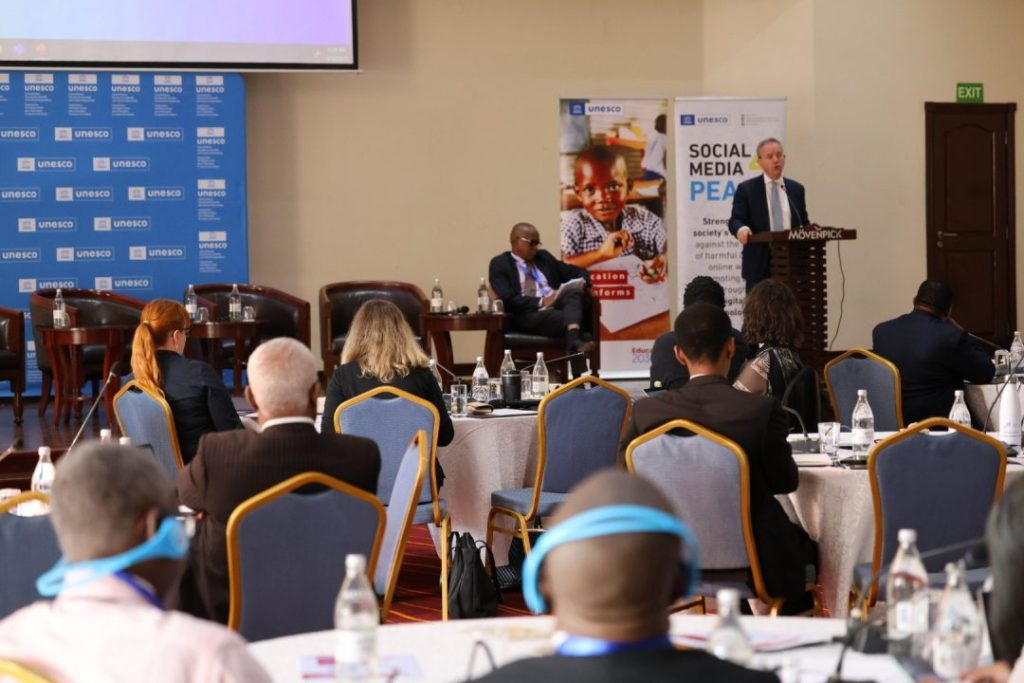
The KNATCOM Ag. CEO giving a key note address in the the Regional workshop during the International Day for Countering Hate SpeechDr. James Njogu, HSC the Acting Secretary General/CEO of the Kenya National Commission for UNESCO (KNATCOM), joined stakeholders from Education, Information Communication and Technology, CSOs, private sector, media, civil society, academia on June 18, 2025, at the Mövenpick Hotel in Nairobi where he delivered a compelling keynote during a regional workshop themed 𝑨𝒅𝒅𝒓𝒆𝒔𝒔𝒊𝒏𝒈 𝑯𝒂𝒕𝒆 𝑺𝒑𝒆𝒆𝒄𝒉 𝒂𝒏𝒅 𝑩𝒖𝒊𝒍𝒅𝒊𝒏𝒈 𝑷𝒆𝒂𝒄𝒆 𝑻𝒉𝒓𝒐𝒖𝒈𝒉 𝑬𝒅𝒖𝒄𝒂𝒕𝒊𝒐𝒏, 𝑴𝒆𝒅𝒊𝒂, 𝒂𝒏𝒅 𝑰𝒏𝒇𝒐𝒓𝒎𝒂𝒕𝒊𝒐𝒏 𝑳𝒊𝒕𝒆𝒓𝒂𝒄𝒚.Regional workshop during the International Day for Countering Hate Speech
Dr. Njogu welcomed distinguished guests, including Dr. Elias Abdi, who represented Mr. Julius Migos Ogamba, Cabinet Secretary for the Ministry of Education. In a speech delivered on behalf of the Cabinet Secretary, Dr. Abdi highlighted the urgent need to combat rising hate speech and misinformation in Kenya emphasizing the critical role of peace education and media literacy in uniting the country’s diverse communities. Drawing on lessons from the 2007 post-election violence, the speech showcased initiatives such as student-led peace campaigns and value-based curricula. The Cabinet Secretary’s speech stressed that peacebuilding must involve not just the government but also educators, media, civil society, and youth, with schools serving as key spaces to foster critical thinking, empathy, and national unity in the digital age.
In his keynote, Dr. Njogu affirmed KNATCOM’s strong partnership with the Ministry of Education, UNESCO, and other stakeholders in advancing peace, tolerance, and national cohesion through strategic education and communication initiatives. He emphasized that media and information literacy is central to combating hate speech and radicalization, both online and offline, and highlighted the role of informed and ethical media in safeguarding truth, dignity, and freedom of expression.
He also highlighted KNATCOM’s collaborative projects such as the Associated Schools Network, UNESCO Clubs, and teacher training programs that integrate peace education and global citizenship into Kenya’s curriculum. Dr. Njogu called for an inclusive, multisectoral approach engaging youth, educators, journalists, and civil society to promote responsible digital citizenship.
Recognizing the dual power of technology and AI to either unite or divide, he urged stakeholders to harness digital innovation for public good while remaining vigilant against misinformation and digital harm.Participants engaging on panel discussion during the Regional workshop during the International Day for Countering Hate Speech
In closing, Dr. Njogu reaffirmed KNATCOM’s commitment to the Sustainable Development Goals, particularly those tied to education, peace, and freedom of expression, and appreciated participants for their dedication to creating a more just, informed, and peaceful society.
To provide the best experiences, we use technologies like cookies to store and/or access device information. Consenting to these technologies will allow us to process data such as browsing behavior or unique IDs on this site. Not consenting or withdrawing consent, may adversely affect certain features and functions.
Functional
Always active
The technical storage or access is strictly necessary for the legitimate purpose of enabling the use of a specific service explicitly requested by the subscriber or user, or for the sole purpose of carrying out the transmission of a communication over an electronic communications network.
Preferences
The technical storage or access is necessary for the legitimate purpose of storing preferences that are not requested by the subscriber or user.
Statistics
The technical storage or access that is used exclusively for statistical purposes.The technical storage or access that is used exclusively for anonymous statistical purposes. Without a subpoena, voluntary compliance on the part of your Internet Service Provider, or additional records from a third party, information stored or retrieved for this purpose alone cannot usually be used to identify you.
Marketing
The technical storage or access is required to create user profiles to send advertising, or to track the user on a website or across several websites for similar marketing purposes.
Contains information related to marketing campaigns of the user. These are shared with Google AdWords / Google Ads when the Google Ads and Google Analytics accounts are linked together.
90 days
__utma
ID used to identify users and sessions
2 years after last activity
__utmt
Used to monitor number of Google Analytics server requests
10 minutes
__utmb
Used to distinguish new sessions and visits. This cookie is set when the GA.js javascript library is loaded and there is no existing __utmb cookie. The cookie is updated every time data is sent to the Google Analytics server.
30 minutes after last activity
__utmc
Used only with old Urchin versions of Google Analytics and not with GA.js. Was used to distinguish between new sessions and visits at the end of a session.
End of session (browser)
__utmz
Contains information about the traffic source or campaign that directed user to the website. The cookie is set when the GA.js javascript is loaded and updated when data is sent to the Google Anaytics server
6 months after last activity
__utmv
Contains custom information set by the web developer via the _setCustomVar method in Google Analytics. This cookie is updated every time new data is sent to the Google Analytics server.
2 years after last activity
__utmx
Used to determine whether a user is included in an A / B or Multivariate test.
18 months
_ga
ID used to identify users
2 years
_gali
Used by Google Analytics to determine which links on a page are being clicked
30 seconds
_ga_
ID used to identify users
2 years
_gid
ID used to identify users for 24 hours after last activity
24 hours
_gat
Used to monitor number of Google Analytics server requests when using Google Tag Manager