KNATCOM Strengthens Local Capacity at Biosphere Reserves
Sustainable development through nature-based solutions (NbS), with a strong emphasis on community empowerment, gender equity, and youth inclusion.
In June 2025, KNATCOM conducted a comprehensive study at the Malindi-Watamu-Arabuko Sokoke and Mount Kenya-Lewa Biosphere Reserves. The objective: to evaluate the effectiveness, scalability, and sustainability of NbS initiatives, while identifying challenges faced by local communities—especially women and youth—in amplifying conservation outcomes.
𝐂𝐚𝐩𝐚𝐜𝐢𝐭𝐲-𝐁𝐮𝐢𝐥𝐝𝐢𝐧𝐠 𝐖𝐨𝐫𝐤𝐬𝐡𝐨𝐩𝐬
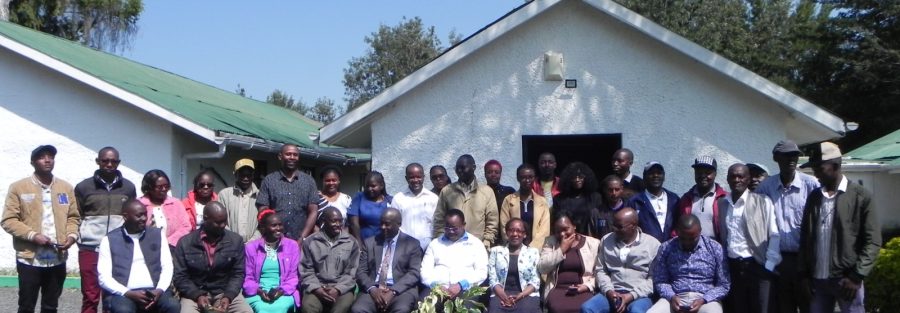
On 4th and 5th September 2025, KNATCOM convened two parallel workshops in Nanyuki (CETRAD) and Mombasa (Kenya School of Government), bringing together 80 community stakeholders. These sessions served as a platform to present findings from the study and equip participants with practical strategies to enhance NbS implementation. The research publication was also launched.
KNATCOM Ag. Secretary General/CEO Dr. James Njogu, HSC Making his remarks during the workshopIn his opening remarks, Dr. James Njogu, Ag. Secretary General/CEO of KNATCOM, lauded the participants’ commitment to conservation despite resource constraints. He urged communities to scale up NbS interventions, especially in transition zones, and to embed gender and youth representation in governance structures to ensure equitable decision-making and benefit sharing.
“By harnessing their diverse perspectives, innovative ideas, and collective action, conservation efforts can achieve greater impact, relevance, and long-term success.” — Dr. James Njogu, Ag. SG/CEO
𝐀𝐝𝐝𝐫𝐞𝐬𝐬𝐢𝐧𝐠 𝐆𝐥𝐨𝐛𝐚𝐥 𝐂𝐡𝐚𝐥𝐥𝐞𝐧𝐠𝐞𝐬 𝐋𝐨𝐜𝐚𝐥𝐥𝐲
The report underscores the potential of biosphere reserve communities to tackle pressing global issues—climate change, biodiversity loss, water scarcity, food insecurity, health risks, urbanization, and youth unemployment—through nature-based approaches.
Participants engaged in dynamic discussions to identify barriers and co-create solutions for effective NbS implementation. The workshops also showcased a variety of successful community-led initiatives already underway across the reserves.A section of the Participants during the workshop.
𝐒𝐮𝐩𝐩𝐨𝐫𝐭𝐞𝐝 𝐛𝐲 UNESCO
This initiative was made possible through the UNESCO Participation Programme, with co-financing from KNATCOM.
To provide the best experiences, we use technologies like cookies to store and/or access device information. Consenting to these technologies will allow us to process data such as browsing behavior or unique IDs on this site. Not consenting or withdrawing consent, may adversely affect certain features and functions.
Functional
Always active
The technical storage or access is strictly necessary for the legitimate purpose of enabling the use of a specific service explicitly requested by the subscriber or user, or for the sole purpose of carrying out the transmission of a communication over an electronic communications network.
Preferences
The technical storage or access is necessary for the legitimate purpose of storing preferences that are not requested by the subscriber or user.
Statistics
The technical storage or access that is used exclusively for statistical purposes.The technical storage or access that is used exclusively for anonymous statistical purposes. Without a subpoena, voluntary compliance on the part of your Internet Service Provider, or additional records from a third party, information stored or retrieved for this purpose alone cannot usually be used to identify you.
Marketing
The technical storage or access is required to create user profiles to send advertising, or to track the user on a website or across several websites for similar marketing purposes.
 𝐂𝐚𝐩𝐚𝐜𝐢𝐭𝐲-𝐁𝐮𝐢𝐥𝐝𝐢𝐧𝐠 𝐖𝐨𝐫𝐤𝐬𝐡𝐨𝐩𝐬
 𝐀𝐝𝐝𝐫𝐞𝐬𝐬𝐢𝐧𝐠 𝐆𝐥𝐨𝐛𝐚𝐥 𝐂𝐡𝐚𝐥𝐥𝐞𝐧𝐠𝐞𝐬 𝐋𝐨𝐜𝐚𝐥𝐥𝐲
 𝐒𝐮𝐩𝐩𝐨𝐫𝐭𝐞𝐝 𝐛𝐲 UNESCO