
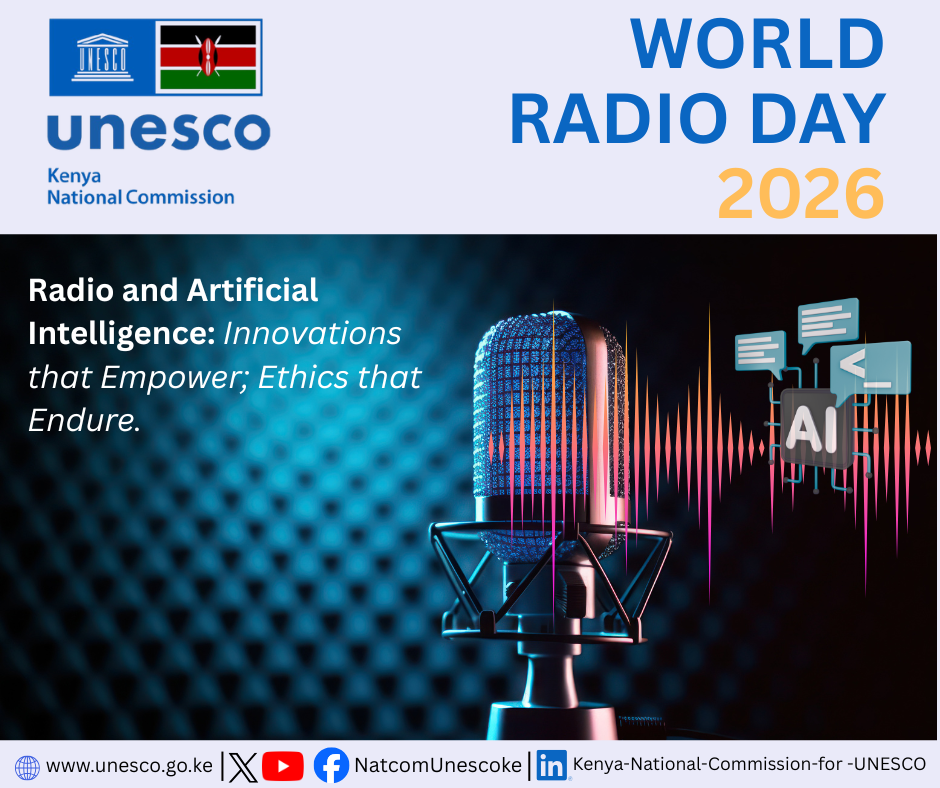

Artificial Intelligence is increasingly shaping how radio content is produced, distributed, and consumed. AI offers opportunities to enhance efficiency, expand reach, and improve audience engagement. Used responsibly, these tools can strengthen radio’s ability to serve the public interest.”
He further emphasized that UNESCO’s normative frameworks, including the Recommendation on the Ethics of Artificial Intelligence, stress that technological innovation must respect human rights, promote transparency, and remain accountable to the public. In the media sector, this means ensuring that AI systems do not replace editorial responsibility, undermine professional standards, or marginalize vulnerable communities. Instead, AI should serve as a tool that supports journalists, strengthens information integrity, and reinforces public trust, particularly during sensitive periods such as elections.
He reaffirmed that KNATCOM will continue collaborating with partners to strengthen radio and uphold ethical media practices in Kenya. This includes building the capacity of journalists and broadcasters, supporting multilingual and inclusive programming, and advancing initiatives that promote Media and Information Literacy.

Ms. Zubeida Kananu, President of the Kenya Editors Guild, was also present during the celebration. Reflecting on her experience working at Radio Maisha, she noted: “As we mark World Radio Day 2026, we gather at a defining moment for broadcasting in Kenya. This year’s theme, ‘Radio and Artificial Intelligence,’ is not abstract; it is immediate and already reshaping our newsrooms, studios, and professional conversations.
For decades, radio has been Kenya’s most accessible and trusted medium. It reaches where fiber optic cables do not. It speaks where media literacy is not guaranteed. It informs where internet connectivity is unreliable. From Turkana to Kisumu, from Kilifi to Nairobi, radio remains the heartbeat of Kenyan public discourse. It informs, it educates, it mobilizes, and in times of crisis, it stabilizes.”
She added that media houses across Kenya are already using AI tools to transcribe interviews, summarize reports, translate bulletins, and digitize archives. In a country with more than sixty languages, the possibilities are significant. AI could help expand multilingual broadcasting, improve efficiency, and preserve Kenya’s rich audio history.

The Chief Executive Officer of the Media Council of Kenya Mr. David Omwoyo Omwoyo, MBS emphasized the critical role of radio in broadcasting weather or traffic updates and entertainment programs from stations such as Classic 105. He noted that the unique feature of radio is its ability to be consumed while people go about their daily activities. Unlike television or newspapers, which require full attention, radio allows audiences to remain informed while working, traveling, or engaging in other tasks.
Reflecting on Artificial Intelligence, he stated: “Artificial Intelligence represents advanced intelligence which is the ability to use technology to enhance delivery. For example, AI schedules announcements, alerts broadcasters to advertisements that are due, and flags breaking news. That integration of AI is what we celebrate. However, ethics must guide this process. AI should not be used to clone voices without attribution or to perpetuate misinformation and disinformation.”
He further noted that in 1946 World Radio Day was first commemorated by the United Nations in recognition of the critical role radio played during the Second World War, providing weather forecasts and vital information on food distribution, safety, and medical assistance. Today, radio continues to serve the same purpose, especially during disasters such as cyclones and other emergencies, where it remains a key channel of communication.
As the celebrations concluded, it was announced that the next major media event, World Press Freedom Day, whose main theme is “Shaping a Future at Peace” will be held in Mombasa on 5th May.